
Curriculum
Our curriculum is designed to be ambitious for every child, building knowledge and skills step by step across their time at Windmill Hill. Every subject’s curriculum is planned using a consistent structure: clear learning objectives linked to key learning points, planned opportunities to revisit and recall previous learning, and explicit teaching of the most important knowledge in each unit — so that what pupils learn builds cumulatively rather than being forgotten.
Each lesson follows our RECALL, I, WE, YOU, REMEMBER structure: pupils first recall previous learning, the teacher then models the new learning clearly (I), pupils practise it together with support (WE), apply it independently (YOU), and finally revisit and consolidate it (REMEMBER). At the start of each unit, pupils receive a ‘Know How’ checklist of the crucial knowledge and skills for that unit, which teachers assess throughout as Working Towards, At age-related expectations, or Greater Depth.
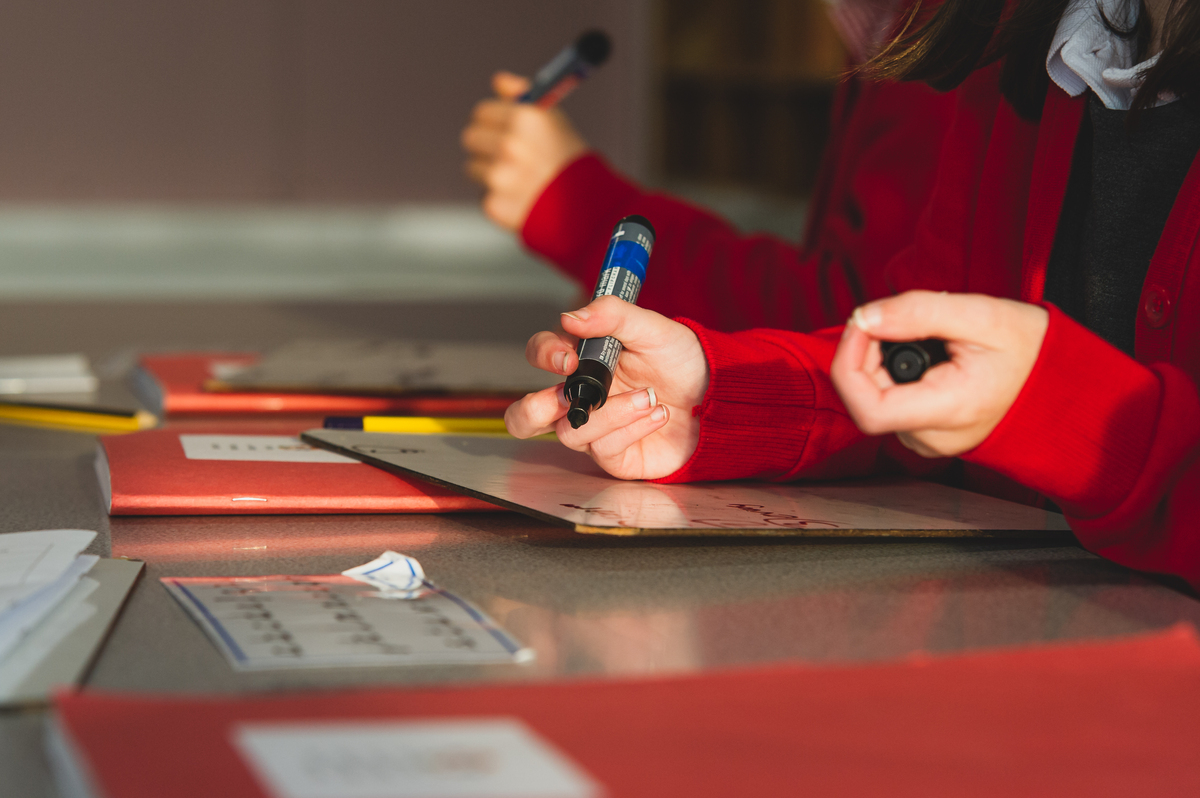
Reading sits at the heart of our curriculum. Pupils learn to read through the DfE validated systematic synthetic phonics programme, Essential Letters and Sounds (ELS), daily reading lessons, and the Collins Big Cat Reading Programme. As pupils progress through school, the texts they encounter are chosen deliberately, linking wherever possible to what they’re learning across the wider curriculum, and reading extends well beyond the reading lesson itself: every class enjoys a daily story read aloud by their teacher, we hold whole-school reading assemblies, and reading volunteers give their time to hear children read individually. We also have a consistent, whole-school approach to handwriting, using the Martin Harvey handwriting scheme from the early years onwards.
For more information about what your child is learning this term, please speak to your child’s class teacher or see our subject-specific curriculum pages.
Art
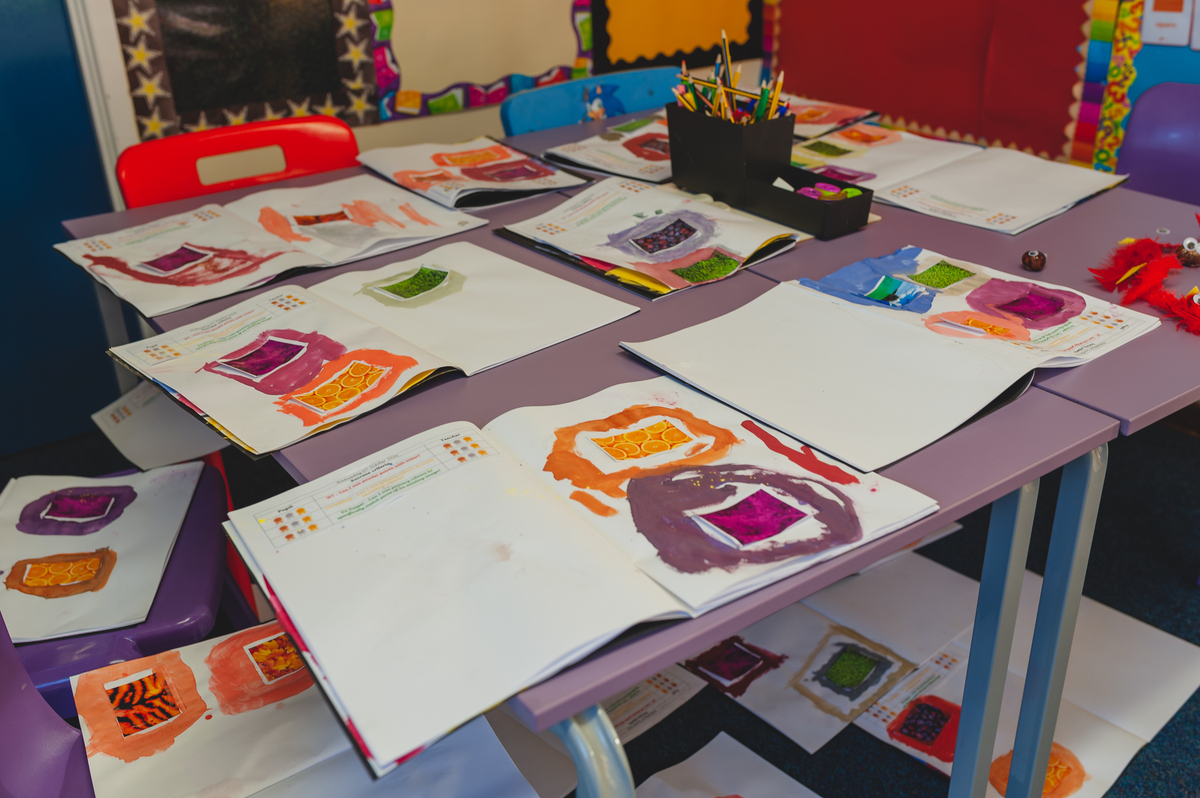
Our Art and Design curriculum gives pupils the opportunity to develop both practical and theoretical skills across a range of artistic disciplines, from drawing and painting to sculpture, printing and textiles, building their confidence as artists as well as their knowledge of art and artists. A detailed curriculum document is now completed across Key Stage 1, Lower Key Stage 2, and Upper Key Stage 2.
Every year group works across every medium — drawing, painting, printing, collage and clay — revisiting and deepening each one rather than meeting it only once. Alongside developing their own practical skills, pupils study the work of a range of artists as they move through school, including Turner, Antoni Gaudí, Katsushika Hokusai, and sculptor Antony Gormley, exploring themes as varied as Ancient Egypt, the Vikings, the Stone Age, and the Maya.
Throughout, pupils build their understanding of the formal elements of art — line, shape, tone, texture, pattern, colour and form — progressively across the school, alongside a growing knowledge of the historical and cultural context of the artists they study.
Units are sequenced so that techniques and knowledge build progressively, taught through our RECALL, I, WE, YOU, REMEMBER structure, with each unit’s ‘Know How’ checklist identifying the crucial skills and knowledge pupils are working towards.

Computing
Our Computing curriculum follows the National Centre for Computing Education (NCCE) scheme, taught in blocks across the year, roughly every other half term, rather than as a single weekly lesson — this allows pupils to focus in depth on each area of the computing curriculum.
Pupils build knowledge across four consistent themes as they move through school: computing systems and networks (from understanding what a digital device is and how our school network works, through to how the internet is structured and who owns the web); creating media (progressing from taking photographs and painting on a computer, through stop-frame animation and video production, to website and digital art creation); data and information (from grouping, counting and labelling in the early years, through to spreadsheets, formulas and collecting and presenting data); and programming (starting with giving instructions and simple algorithms, moving through Scratch and physical computing with Crumble microcontrollers, to using variables, loops and selection to design and improve their own programs).
We aim to develop confident, independent learners who are able to plan, design, create, program and evaluate using technology, while also understanding how to stay safe online — a thread that runs through every unit rather than being taught in isolation. As with our other subjects, learning is taught through our RECALL, I, WE, YOU, REMEMBER structure.

Design Technology
Our Design and Technology curriculum develops pupils’ skills in designing, making, and evaluating, giving them real, hands-on opportunities to solve problems creatively and practically. A detailed curriculum document is now completed across Key Stage 1, Lower Key Stage 2, and Upper Key Stage 2.
Pupils work across all the National Curriculum strands as they move through school — structures, mechanisms, textiles, cooking and nutrition, and electrical systems — with projects and products that grow more demanding each year. In Key Stage 1, pupils design and make products such as a Christmas stocking, a fruit kebab, a wheeled toy, and a freestanding bridge. In Lower Key Stage 2, projects include a steady hand game with a working electrical circuit, a 3D textile product, a shell-structure gift box, and a pop-up book using linkages and levers. By Upper Key Stage 2, projects include a frame structure, a cam-powered mechanism, a complex 3D textile product using computer-aided design, and an automated alarm with a working electrical circuit — a unit we created ourselves to ensure full National Curriculum coverage of electrical systems at this level.
Every project follows the same design, make, evaluate cycle: pupils design a purposeful product for a real user and purpose, make it using a range of practical skills and materials, and then evaluate their own and others’ work against the original design criteria.
Each unit is sequenced to build on prior learning and taught through our RECALL, I, WE, YOU, REMEMBER structure, with progress checked against a ‘Know How’ checklist of the essential knowledge and skills for that unit.

English – Writing
Our Writing curriculum is built around a carefully sequenced medium-term plan for every year group, so that the knowledge and skills children need as writers build progressively year on year. Each unit follows our RECALL, I, WE, YOU, REMEMBER structure, beginning with a short retrieval activity we call our ‘Ninja Starter’ to secure previous learning, before new skills are modelled, practised together, and then applied independently in an extended piece of writing that draws together everything pupils have learned in that unit.
Every unit is built around clear ‘Know how to…’ objectives, so that children and teachers alike are clear on exactly what a confident writer in that unit can do. Behind the scenes, a Progression Grid maps out how each writing skill builds from Year 1 through to Year 6, so that expectations rise consistently and deliberately as children move through the school, rather than each year group working in isolation.
Grammar, punctuation and spelling are taught through a dedicated whole-school programme, with daily practice, so that these foundational skills are secure alongside children’s growing confidence as writers of stories, non-fiction, and poetry.
EYFS – English Writing
Informed by the national Writing Framework, in EYFS the foundations of writing; handwriting and spelling are explicitly taught. Prioritisation of speech and language development, introduction to a broad range of vocabulary and lots of early opportunities for oral composition underpin pupils’ future success in writing composition.
English – Reading
Reading is at the very heart of our curriculum. We know that reading comprehension isn’t a stand-alone skill — it’s the outcome of everything a child knows: their vocabulary, their background knowledge, and how fluently they can read the words on the page. That’s why our approach builds all of these together, rather than treating reading as one thing to be taught in isolation.
Every class has a daily reading lesson built around a high-quality anthology, refreshed every half-term with a mixture of fiction extracts, non-fiction linked to our wider curriculum, poetry, and playscripts. Within each lesson, children build their vocabulary, practise reading fluently and with expression, and develop their comprehension skills — asking questions, making inferences, and explaining what they’ve read, in what we call our VIPERS approach.
Younger children learn to read through Essential Letters and Sounds, our systematic synthetic phonics programme, with daily phonics lessons and books carefully matched to the sounds they’ve learned. We track every child’s progress closely and give extra practice to any child who needs it, so that no one falls behind in the early, crucial stages of learning to read.
Reading happens well beyond the reading lesson itself. Every class enjoys a daily story read aloud by their teacher, and as children progress through school, the books we share with them are chosen carefully — building a love of reading while also linking, wherever possible, to what they’re learning across the wider curriculum. We also work hard to build a wider reading culture: regular library visits, whole-school reading assemblies, author visits, reading volunteers who give their time to hear children read, reading raffles and rewards, and a strong partnership with parents and carers so that reading for pleasure continues at home as well as at school.
Geography
At Windmill Hill, our Geography curriculum is designed to develop children’s curiosity and fascination about the world and its people, a fascination we hope will remain with them for the rest of their lives. A detailed curriculum document is now completed across Key Stage 1, Lower Key Stage 2, and Upper Key Stage 2.
Pupils build knowledge from the global to the local and back again as they move through school. In Key Stage 1, they study Our World: Continents and Oceans, a contrasting non-European country (Kenya), The United Kingdom, and Our Local Area, including fieldwork in Sheffield. In Lower Key Stage 2, this grows to include Rivers, Europe, Mountains, Volcanoes and Earthquakes, North America, and Settlement and Land Use in the Changing UK. By Upper Key Stage 2, pupils study Climate Zones and Biomes, South America, Tectonic Plates, a Global City study of London, and undertake their own local fieldwork investigation into environmental change.
Across every unit, pupils build knowledge across four key strands: locational knowledge (where places are and how they relate to one another), place knowledge (what makes places distinctive), human and physical geography, and geographical skills and fieldwork — including map work, using atlases and globes, and first-hand enquiry in the local area.
This is all taught through our RECALL, I, WE, YOU, REMEMBER lesson structure, with progress checked against each unit’s ‘Know How’ checklist.

History
We guarantee that historians at Windmill Hill all have the opportunity to experience high-quality first teaching through a range of dedicated, skills-based lessons, where they focus on chronology, historical enquiry, and interpretations of history. A detailed curriculum document is now completed across Key Stage 1, Lower Key Stage 2, and Upper Key Stage 2, sequencing the essential historical knowledge and enquiry skills pupils build throughout the school.
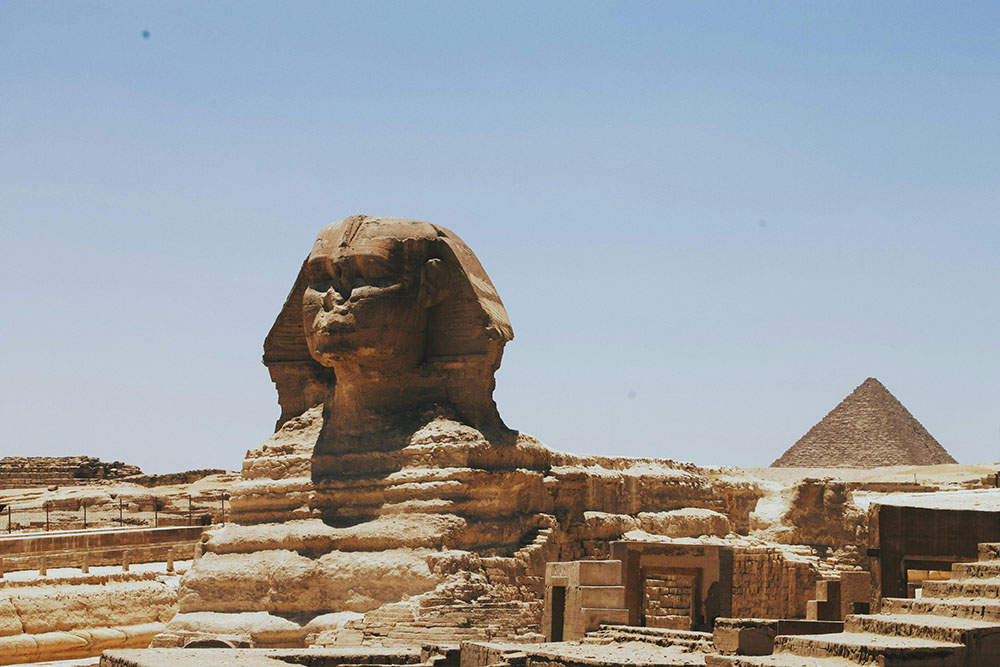
In Key Stage 1, pupils begin close to their own experience — comparing significant individuals such as Christopher Columbus and Neil Armstrong, studying Toys in the Past and Schools Now and in the Past, and learning about local and national events including the Sheffield Floods, the Great Fire of London, and the life of Florence Nightingale. In Lower Key Stage 2, pupils study the Ancient Egyptians, the Vikings, Stone Age to Iron Age Britain, Ancient Greece, the Romans, and a local history study of coal mining in South Yorkshire. By Upper Key Stage 2, pupils study more distant and demanding periods, including the Anglo-Saxons, the Tudors, World War Two, the Ancient Maya, and a dedicated Sheffield local history study of the city’s steel industry and Mary Queen of Scots.
Throughout, pupils build a secure sense of chronology — understanding when events happened and how different periods relate to one another — alongside the skills of historical enquiry: asking questions, using and evaluating a range of sources as evidence, and understanding that people in the past can be, and have been, interpreted in different ways.
As with our other subjects, each unit is taught through our RECALL, I, WE, YOU, REMEMBER structure, with a ‘Know How’ checklist of crucial knowledge for pupils to work towards, secure, or work beyond.
Maths
Our Early Years Foundation Stage follows Development Matters, building secure early number sense through Mastering Number so that children achieve the Mathematics Early Learning Goals with confidence.
In Key Stage 1 and Key Stage 2, we teach a mastery curriculum supported by the White Rose Maths Scheme of Learning, giving every child the opportunity to develop deep understanding rather than moving on before a concept is secure. Throughout school, we use a concrete, pictorial, abstract (CPA) approach — children explore a concept hands-on with practical resources, then represent it pictorially, before moving to abstract number work, so that written methods are always meaningful rather than just a way of getting an answer.
Key number facts are built and embedded through KIRFs (Key Instant Recall Facts), set for each year group every half-term and shared with parents so that quick practice at home can support what’s being learned in school. Times tables are taught through a progressive whole-school plan, with times tables practised regularly using TT Rockstars — short, frequent practice sessions rather than long, infrequent ones — alongside Numbots to build the early number skills that times tables depend on. By the end of Year 2, almost all children know their 2, 5 and 10 times tables; by the end of Year 3, the 3, 4 and 8s as well; and by the end of Year 4, all times tables to 12×12.
Every week, pupils also complete a short arithmetic checks, revisiting the same essential skills in a positive way, so that gradual progress and gaps are both easy to see. Alongside this, our whole-school calculation policy sets out a clear progression from mental methods, to jottings and expanded methods, to efficient written methods, so that pupils always have a consistent, secure approach to fall back on, and can choose the most efficient method for the calculation in front of them.

MFL
Pupils learn Spanish using the Language Angels scheme, developing their speaking, listening, reading and writing skills in a modern foreign language through a structured, progressive curriculum that builds confidence in communicating in a language other than their own.
In Lower Key Stage 2, pupils begin with Spanish phonics — listening for sounds, accurate pronunciation, and decoding — before building a foundation of numbers, colours, greetings and days of the week, then extend this into topics such as animals and fruits, using their growing vocabulary to speak and write in short phrases and simple sentences.
In Upper Key Stage 2, pupils consolidate their phonics knowledge and apply it to grammar, learning to talk about what they can and cannot do, to present themselves confidently in Spanish, to describe their classroom and belongings, and to talk about their family — building steadily from single words and phrases towards accurate, independent sentence construction.

Music
Music is taught using the Get Set 4 Music scheme, giving pupils a progressive introduction to listening, singing, playing, composing and performing. Every unit develops five interconnected strands — listening, composing, performing, and pupils’ social, emotional and thinking skills — so that musical learning also builds confidence, collaboration and self-expression more widely.
Units are often linked to what pupils are already learning elsewhere in the curriculum: Year 1 explore graphic scores through ‘At the Seaside’, Year 2 study dynamics and Baroque music through ‘The Great Fire of London’, Year 3 learn to read and perform on the glockenspiel and explore Medieval music through ‘Castles’, Year 4 compose pentatonic melodies inspired by ‘Rivers’, Year 5 explore the instruments and structure of ‘Rock and Roll’, and Year 6 write and perform their own songs through a ‘World War Two’ unit — giving pupils’ musical learning genuine roots in what they already know.
Phonics
At Windmill Hill, we are committed to ensuring that every child becomes a confident, fluent reader. Our phonics provision is at the heart of this ambition. We believe that early and systematic phonics instruction provides the essential foundation for literacy development and supports all children, including those with diverse learning needs, in becoming successful readers.
We follow the DfE validated scheme ‘Essential Letters and Sounds’ which teaches children to decode and blend sounds effectively from the earliest stages of learning.
Through rigorous assessment, quality teaching, and a passion for reading, we aim to inspire a lifelong love of reading and ensure that all pupils leave our school with the confidence and skills to succeed in their future.

Physical Education
Our PE curriculum uses the Get Set 4 PE scheme, and aims to enthuse every child to participate in physical activity for life, following national curriculum objectives within a whole-school framework of age-related aims. Pupils in Key Stage 2 have 2 PE lessons per week, and pupils in Key Stage 1 have 1 PE lesson per week.
Across the year, pupils build fundamental movement skills in the early years — including running, jumping, throwing, balance and co-ordination — and go on to apply and extend these across a genuinely broad range of activities: target games, net and wall games, ball skills, fitness, gymnastics and dance in Key Stage 1; and athletics, football, basketball, dodgeball, badminton, rugby, cricket, tennis, yoga, outdoor and adventurous activities, gymnastics and dance as pupils move through Key Stage 2.
Swimming and water safety are a statutory part of the curriculum, and we’re proud of how well our pupils achieve here: by the end of Year 6, 84% of pupils can swim competently, confidently and proficiently over 25 metres, 84% can use a range of strokes effectively, and 90% can perform safe self-rescue in different water-based situations.
PE and Sport Premium funding also supports a wide range of opportunities beyond the curriculum: specialist coaching, staff CPD, and entry into external competitions and festivals across football, athletics, and other sports, including events specifically supporting girls’ participation in sport.

PSHE & RSE
PSHE sits at the heart of the culture and ethos of our school. Our curriculum uses Jigsaw PSHE 3-11, a comprehensive scheme that supports pupils’ personal development, health, wellbeing, and understanding of relationships, and fully meets the statutory requirements for Relationships Education and Health Education.
Every year group covers the same six themed units, or ‘Puzzles’, each taught for approximately half a term and building in depth and maturity as pupils move through school. Being Me in My World explores personal identity, rights and responsibilities, and pupils’ place in the school community. Celebrating Difference builds understanding and respect for diversity and challenges stereotypes. Dreams and Goals develops resilience, perseverance and the skills to work towards personal ambitions. Healthy Me covers the relationship between physical and emotional health, nutrition, exercise and keeping safe. Relationships explores friendships, family, and how to communicate and resolve conflict with kindness. Changing Me covers growth, change and, for our oldest pupils, age-appropriate learning about how the human body grows and changes.
Every Jigsaw lesson follows a consistent structure that pupils quickly become familiar with: a ‘Calm Me Time’ mindfulness activity to help pupils settle and focus, followed by a ‘Connect Us’ activity that builds relationships and a sense of belonging within the class, before the main learning of the lesson. This consistency, alongside an emotional-literacy focus running through every unit, helps pupils build the vocabulary and confidence to talk about their feelings and experiences.
Fundamental British Values — democracy, the rule of law, individual liberty, and mutual respect and tolerance — are explicitly threaded through every unit, not taught as a stand-alone topic, and our PSHE curriculum plays a central role in our safeguarding provision, helping pupils recognise when something isn’t right and know how to seek help with confidence.
Alongside weekly PSHE lessons, our programme includes dedicated coverage of Black History Month, Anti-Bullying Week, and Children’s Mental Health Week, ensuring pupils’ personal development is supported by a rich calendar of whole-school focus, not just what’s taught in the classroom. Jigsaw themes are also reflected in our assembly programme, so that the messages pupils explore in PSHE lessons are reinforced and celebrated across the whole school, not confined to a single weekly lesson.
R.E.
At Windmill Hill we follow the NATRE (National Association of Teachers of RE) framework for Religious Education. The principal aim of religious education is to explore what people believe and what difference this makes to how they live, so that pupils can gain the knowledge, understanding and skills needed to handle questions raised by religion and belief, reflecting on their own ideas and ways of living.
Parents and carers have the right to withdraw their child from all or part of Religious Education. We would also warmly welcome a conversation with any parent or carer who has a question or concern about specific content, so please don’t hesitate to get in touch with the school office — we’re always happy to talk this through before a decision to withdraw is made, if that would be helpful.
Science
Our Science curriculum is designed to build pupils’ scientific knowledge and working-scientifically skills progressively across their time at Windmill Hill, giving every child the chance to think, question and investigate like a scientist as well as build a secure body of scientific knowledge. A detailed curriculum document is now completed for Key Stage 1, Lower Key Stage 2, and Upper Key Stage 2.
Units are carefully sequenced so that knowledge builds year on year: in Key Stage 1, pupils study units such as Everyday Materials, Animals, Plants, Living Things and Their Habitats, and Caring for Our Planet. In Lower Key Stage 2, Year 3 covers Rocks, Fossils and Soils, Plants, Forces and Magnets, Light and Shadows, and Animals Including Humans, while Year 4 covers Electricity, Sound, States of Matter, Living Things and Their Habitats, and Animals Including Humans. By Upper Key Stage 2, pupils tackle more demanding concepts — Year 5 studies Forces, Properties and Changes of Materials, Earth and Space, and Animals Including Humans, while Year 6 covers the Circulatory System, Evolution and Inheritance, Classification, Light, and Electricity.
Alongside this growing body of knowledge, pupils develop the skills of working scientifically — observing over time, pattern seeking, identifying and classifying, carrying out comparative and fair tests, and researching using secondary sources — so that they learn not just scientific facts, but how to investigate and think like a scientist.
Each unit identifies the crucial knowledge pupils need to secure, sequenced so that learning builds cumulatively rather than being taught in isolation. Lessons follow our RECALL, I, WE, YOU, REMEMBER structure, and pupils are assessed against a ‘Know How’ checklist of the essential knowledge and skills for each unit.
